Category: CBER in the News

Medical manufacturer to shutter Alabama plant after receiving millions in incentives

  • November 27th, 2023

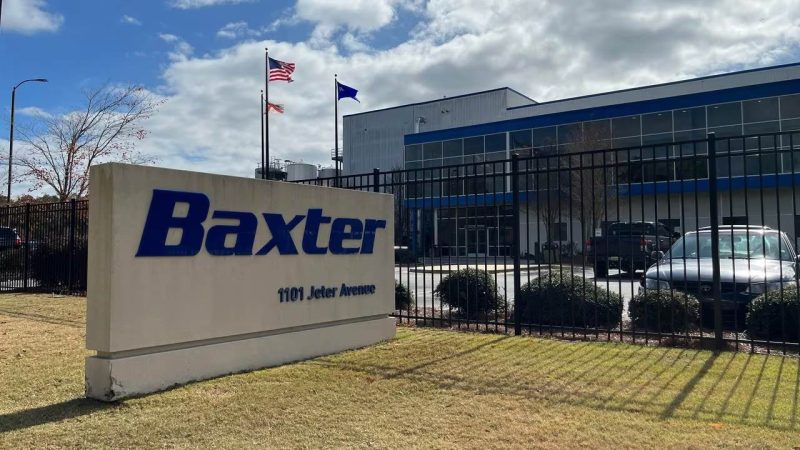
Baxter Healthcare Corp. accepted about $3.3 million in state and local government incentives tied to the expansion of its Alabama plant. In exchange, the company agreed to hire and keep at least 200 employees through last year.

This month, with the decade-long deal done, the company is closing the facility in Opelika and laying off 459 employees. So was this a good deal for Alabama? For Opelika?

“No question about it. It’s a huge capital investment,” Gary Fuller, Opelika’s mayor, told AL.com on Wednesday, emphasizing that the city’s incentives were performance-based. “It was an excellent arrangement for us.”

The small city paid Baxter $1.3 million in cash incentives over the last eight years, in addition to providing other tax breaks, according to city records obtained by AL.com.

The medical device manufacturer also received $2 million from the state, said Stefania Jones, spokeswoman for the Alabama Department of Commerce.

Representatives for the Commerce Department didn’t respond to specific questions about the impact of the incentives given the closure, though Jones said that Alabama and Baxter “fulfilled their obligations in the agreement.”

Fuller pointed to two ways the city directly benefited from Baxter’s presence: education-related taxes, which he said supported Opelika city schools, and the city’s occupational license fee, for which the city collects 1.5% of payroll.

Baxter was eligible for more than $5 million in total cash incentives through its decade-long agreement with Alabama, Opelika and Opelika Industrial Authority, per a copy of the original 2014 agreement. In exchange, Baxter invested $270 million into expanding the facility that’s operated since the early 2000s, doubled the existing space to 400,000 square feet and doubled its workforce to 350 employees.

As of Nov. 30, Baxter is laying off hundreds more employees than it was incentivized to hire. That’s per a WARN notice reported Sept. 27, which major employers are legally required to file to notify the state that it plans to cut a lot of jobs. The company reported to Opelika that it employed 564 full-time workers at the Alabama plant, as of June 2022, per a company memo obtained by AL.com.

Sam Addy, a senior research economist who has served on committees reviewing the state’s incentive program, said that the Departments of Revenue and Commerce examine what a company like Baxter presents early on while making incentive agreements.

“They get [incentives] for when they are meeting the terms on an annual basis, so we don’t lose out,” he said. “The main risk is, do they get successful enough to stay?”

Greg LeRoy, executive director and founder of Good Jobs First – a watchdog group for state and local economic development subsidies – said Alabama and Opelika could’ve made a stronger deal. The agreement could’ve required a longer maintenance period than the incentives and tax credit period, he said.

“Business basics drive these decisions, not incentives. In this case, obviously, the incentives apparently don’t matter, or marginally, because even if the company had left earlier they wouldn’t have had to pay back very much and still got a lot of benefits.”

The bigger question, he said, is: “Why isn’t Opelika sticky enough for this company to stay?”

Addy, who is also associate dean for economic development outreach at the University of Alabama Culverhouse College of Business’ Center for Business and Economic Research, noted that Baxter progressed further than some other companies have before closing. He pointed to the state’s “pay-as-you-go” incentive program as why it’s successful, as opposed to handing over the incentives up front.

“As a whole program, it’s really good. The ROI on it is very high,” he said. “But you will always find single firms that don’t achieve success as we wanted.”

Why Baxter’s plant is shutting down

The company announced the closure of its plant in July, blaming the closure on rising costs of production and a competitive market. The facility in Opelika’s Fox Run Business Park produces dialyzers used in the treatment of advanced kidney disease.

After layoffs, Baxter will shut down all operations of the plant during the first half of next year, a company spokesperson said in an emailed statement to AL.com. The spokesperson declined to comment on the incentives. In the meantime, the company said it’s offering employees severance packages and assistance programs as well as connecting employees with other jobs within the company.

“This decision was made with considerable thought for our employees, the Opelika community and our patients and customers, and only after exploring other options,” the spokesperson said. “Based on the strength of the Opelika community and its talented workforce, we are exploring possible alternative uses for our facility in the future, but don’t have anything specific to share at this time.”

Baxter International Inc. also pointed to the global competition of the dialyzer market in its quarterly report posted July 27, for the three-month period ending June 30. “We believe that there is more than adequate availability of dialyzers in the United States and globally,” the company said in the financial report.

It’s unclear what will happen to the plant. Fuller said he’s asked corporate leaders at Baxter about that, noting that the plant’s design is specific to medical or pharmaceutical production.

“The company has been pretty close-mouthed of what their intentions were with the facility,” he said. “That’s a lot of money sitting there on that piece of property.”

In the meantime, Fuller said he hopes to recruit more companies to the city – including one that could be interested in taking over the facility. The city’s current top employers include the hospital East Alabama Medical Center, auto parts manufacturer Mando America Corp., vitamin producer Pharmavite, meat processor Golden State Foods and bottling plant Niagara Bottling.

Opelika is working with Southern Union State Community College, Baxter, Alabama Industrial Development Training – the state’s workforce agency – and local employers to host several job fairs for the affected employees, Fuller said.

“Our number one concern is those employees and helping them get situated,” he said. “We’ve got industry in Opelika that definitely needs additional folks, and finding workforce has been a tremendous challenge for us.”

When the original Gambro Renal Products plant first opened in the early 2000s, it was the largest capital investment in Lee County at the time, Fuller said. Baxter Healthcare’s parent company, Baxter International Inc., based in Deerfield, Illinois, acquired Gambro in 2013 and took over the Opelika plant.

The company has recently landed itself more cash in a $4.25 billion sale of its spun-off biopharma solutions business to two private equity firms. The company has two other plants that continue to produce dialyzers in other states. For now, only Baxter’s Alabama facility is closing, per the company.

LeRoy, who previously worked at a grassroots organization to prevent plant closings, said that the closure of the Baxter facility doesn’t make sense to him, pointing to the facility’s recent upgrade and expansion.

“Why can’t they make it there? From the outside, it’s like, what’s going on here? I would love to know the backstory,” he said. “The mysterious press release about global forces, it’s just mumbo jumbo until you unpack it.”

Baxter’s government incentive deal

In addition to cash incentives, Baxter also qualified for millions of dollars in state and local tax breaks from Alabama and Opelika. Lee County didn’t have any agreement with Baxter, per county administrator Holly Leverette.

Alabama also pledged to help with recruitment and training through the state’s workforce agency as well as cover some road improvement costs, provide fast-track permits and help the company qualify for income tax credits and tax exemptions tied to its electricity use. The State Industrial Development Authority also offered to pay $150,000 of the company’s expenses, but a representative said there was no record of that payment to Baxter.

Over the past nine years, Opelika has paid almost all of its incentives that it had originally pledged to Baxter, including milestones in its facility’s expansion, reimbursements for purchases from local vendors, cash tied to hiring goals, tax rebates, and relocation stipends to Baxter managers who moved to Opelika, according to payment records between the city and Baxter.

The city’s most recent check to Baxter was on Sept. 29: a $110,736.80 tax rebate for the prior tax year, according to a review of receipts. The most recent payment from the city tied to Baxter’s employee count came in August 2022, for $70,000.

The Opelika Industrial Development Authority pledged more grants for training opportunities, and entered a ground lease with Baxter for the 10.35 acres of land it needed for its facility’s expansion.

“It bothers me to think of someone being without a job during the holidays,” Fuller said. “I’m just keeping my fingers crossed that Baxter will make us all smile here in a few months with something new and exciting for their Opelika facility.”

By 

© 2023 Advance Local Media LLC. All rights reserved (About Us).

State Business Leaders Still Wary of U.S. Economy

  • October 18th, 2023

TUSCALOOSA, Ala. – State business leaders continue to be concerned about the national economy, dampening their financial outlook, according to the latest quarterly survey by The University of Alabama.

The UA Center for Business and Economic Research’s latest Alabama Business Confidence Index, taken in early September, decreased slightly, indicating expectations for a mild drop-off from last quarter’s economic performance.

The drop in confidence comes after the last survey found signs state business were reversing their negative outlook.

“The outlook for the U.S. economy remained strongly contractionary,” said Susannah Robichaux, socioeconomic analyst for CBER. “This index has been negative for the past eight quarters and the lowest component index for the past nine quarters, indicating sustained expectations for worse national economic conditions.”

The ABCI for the fourth quarter of 2023 is 48.2, which is slightly below the third quarter’s neutral index but still a better outlook than the post-pandemic low of 45.7 in the first quarter of this year. An index over 50 indicates an expansionary forecast compared to the previous quarter, and the closer the number is to 100, the more confident the forecast.

ABCI is gathered from a broad group of business executives across the state with six key indicators and a composite index. The statewide and national forecasts, along with industry-specific components like sales, profits, hiring and capital expenditures comprise the six indexes that combine to make the ABCI total.

Lingering concern over a possible economic recession could be why business leaders remain negative on the national economy. The rising interest rates by the Federal Reserve may finally start to slow the economy down now that business and personal savings built up during the pandemic are depleted, said Ahmad Ijaz, CBER executive director.

“Alabama’s economy is still doing relatively well, one reason businesses are more optimistic about the state’s economy than they are about the national economy,” he said.

CBER forecasts the state’s economy to grow 1.5% this year, about the same as in 2022 with both employment and state tax collections growing more slowly than last year.

This quarter, five of the nine industry groupings had an index above 50 showing a positive outlook for their own industry’s sales, profits, hiring and capital expenditures. The industry grouping with the highest and largest increase in confidence includes panelists in transportation, information and utilities.

Only three industries are forecasting a decrease in their sales compared to the previous quarter: wholesale trade, retail trade, and manufacturing.

Of the five metro areas in the state tracked in the survey, business leaders in Montgomery and Tuscaloosa have mildly positive outlooks for their local economies while the rest had negative outlooks.

The breakdown of all the industry forecasts by sector can be seen in the statewide ABCI report on CBER’s website.


The University of Alabama, part of The University of Alabama System, is the state’s flagship university. UA shapes a better world through its teaching, research and service. With a global reputation for excellence, UA provides an inclusive, forward-thinking environment and nearly 200 degree programs on a beautiful, student-centered campus. A leader in cutting-edge research, UA advances discovery, creative inquiry and knowledge through more than 30 research centers. As the state’s largest higher education institution, UA drives economic growth in Alabama and beyond.

Contact

Adam Jones, UA Strategic Communications, 205-348-4328, adam.jones@ua.edu

Source

Susannah Robichaux, socioeconomic analyst for CBER, scrobichaux@cba.ua.edu


Business Just Might be Getting Better, Executives Say

  • July 26th, 2023

By Business Alabama Staff

The state’s business leaders expect the economy to do no worse than it has been and maybe even improve, according to the quarterly Alabama Business Confidence Index.

The survey is conducted by the Center for Business and Economic Research at the University of Alabama.

“For the first time since the second quarter of 2022, five of the six component indexes that go into the overall ABCI reflect business leaders are neutral or mildly positive,” the University said in announcing the results. “These offer insight into the near-term state economy and forecasts for panelists’ own business and industry. The only negative index is the U.S. economic outlook, a sour national expectation they’ve reported consistently for nearly two years.”

Susannah Robichaux, socioeconomic analyst at CBER, said, “Over 50% of panelists are forecasting worse conditions in the national economy next quarter compared to the second quarter, and while we can’t say exactly why, ‘uncertainty’ is a useful umbrella to catch a lot of the concerns those business leaders could have.”

To gather the results, the CBER surveys executives around the state, asking about topics such as sales, profits, hiring and capital expenditures and analyzing results by region and by industry.

Those surveyed were most positive about the chance for increased sales this quarter and they expect to hire more workers, the CBER reported, with six of the nine industry groups showing a positive outlook. “Only two industries had a positive outlook in the first quarter of the year and four last quarter,” the UA statement said.

By region, Huntsville had the most positive expectations and Mobile the least.

“Earlier in the year, most businesses were anticipating a recession, but now there is a good chance the Federal Reserve might be able to pull a soft landing of slower growth without becoming a full-blown recession,” said Ahmad Ijaz, CBER executive director and director of economic forecasting. “With the rate of inflation slowing down, we may be towards the end of Fed rate hikes, which lowers the cost of doing business for most firms. That makes these firms a bit more optimistic about the economy going forward.”

Complete results are available here.


© Copyright 2020 Business Alabama Magazine, All Rights Reserved.

Entrepreneurship in Alabama at All-Time High

  • May 22nd, 2023

TUSCALOOSA, Ala. — Small business entrepreneurship is healthy in Alabama, according to an analysis of websites registered with a popular web hosting platform. 

To better understand the nuances of Alabama’s entrepreneurial ecosystem, Dr. Nyesha Black, director of demographics for The University of Alabama’s Center for Business and Economic Research, partnered with GoDaddy’s Venture Forward research initiative to analyze new data from a recent study and found entrepreneurship is at an all-time high in Alabama. 

In Alabama, Venture Forward estimates that there are over 150,000 online ventures — businesses with GoDaddy-registered domains and active websites. Most of the ventures are microbusinesses with fewer than 10 employees. 

GoDaddy is an internet domain registration and web hosting company, and Venture Forward quantifies the economic impact made by entrepreneurs by providing insight into their needs, demographics, challenges and behaviors. 

“Technology reduces the barrier of entry into entrepreneurship in the digital space,” Black said. “It became increasingly important for me to quantify the impact these entrepreneurs have on Alabama’s communities and economy. Through our partnership with Venture Forward by GoDaddy, I hope to attract the attention of local decision-makers willing to act and support these entrepreneurs and further the case to increase broadband access and speed across the state.” 

Since the onset of COVID-19, new businesses started at an increased rate across the country. Venture Forward research finds the same phenomenon in Alabama. Key findings from the study include:  

  • About one out of 10 microbusinesses want to grow into a corporation with a large employee base or a billion-dollar-valued company.  
  • Gen Z and Millennial entrepreneurship rates nearly doubled when compared to pre-pandemic rates from 23% at the start of 2020 to 43% in 2023.  
  • Among this new class of entrepreneurs in Alabama, Black entrepreneurs lead the charge as a fast-growing demographic across the state, currently at 30% of all Alabama online microbusinesses as of January 2023. 
  • When asked about the rationale behind launching their business, Alabama respondents’ top three answers were to support a cause or hobby, be their own boss, and make extra money. 

“Studying Alabama’s online microbusiness we were able to uncover new insights about these local entrepreneurs,” said Alexandra Rosen, senior director of Venture Forward. “The strong growth in numbers statewide, including the increasing diversity of business owners and the unique agility to launch an online venture with less than $5,000, stood out when analyzing Alabama’s economy.” 

To learn more about Venture Forward’s partnership with The University of Alabama and Dr. Black and to view the full results of the Alabama survey, please visit the Venture Forward site. 

Source

Dr. Nyesha Black, Center for Business and Economic Research, ncblack@culverhouse.ua.edu

Contact

Adam Jones, UA communications, 205-348-4328, adam.jones@ua.edu

The University of Alabama, part of The University of Alabama System, is the state’s flagship university. UA shapes a better world through its teaching, research and service. With a global reputation for excellence, UA provides an inclusive, forward-thinking environment and nearly 200 degree programs on a beautiful, student-centered campus. A leader in cutting-edge research, UA advances discovery, creative inquiry and knowledge through more than 30 research centers. As the state’s largest higher education institution, UA drives economic growth in Alabama and beyond.

UA Economists: State Economy to Shrink Slightly in 2023

  • February 6th, 2023

TUSCALOOSA, Ala. – Alabama’s economy will likely contract in 2023, but just barely, according to researchers at The University of Alabama.

Persistent inflation, labor shortages, lingering supply chain bottlenecks and international effects from the war in Ukraine will continue to drag national and state economic growth, according to the annual economic forecast from the Center for Business and Economic Research at UA.

Alabama’s economic output is projected to decrease 0.1% this year, a smidge better than the possible 0.2% slowdown projected for the United States in the report. The slight economic slowdown for the state comes after mild 1.3% growth in 2022 and stellar 5.1% in 2021 as the economy shook off the 3.2% pandemic-induced contraction in 2020.

“The economy, at some point, will slow down,” said Ahmad Ijaz, CBER executive director and director of economic forecasting. “Even if we go into a recession, it is only expected to be a mild one, hopefully, but that can change.”

Key to the essentially flat growth projection for this year is the possibility the Federal Reserve will be able to avoid an economic recession while raising interest rates, the so-called “soft landing” for the economy.

“Looking at the current data, it is very likely that the Fed will be able to engineer a soft landing as long as the consumers spending continues to grow,” Ijaz said.

Part of the Culverhouse College of Business, UA’s Center for Business and Economic Research has produced forecasts of economic activity in Alabama since 1980. These forecasts cover Alabama’s Gross Domestic Product, employment, and income by industry group and are published in the annual Alabama Economic Outlook. Forecast updates are run quarterly. The center incorporates data from the last 30 years, including cycles and recoveries captured over the years, into its statistical and economic models.

Along with annual dives into the national and state economy, including examinations of metro areas in Alabama, this year’s outlook includes a special look at the growth and challenges facing e-commerce and digital entrepreneurship in Alabama.

The 2022 Alabama Economic Outlook, available for free on the center’s website, reports consumer spending should grow at a modest pace as pandemic-era savings dwindle and interest rates eventually dampen the American consumer.

Sectors tied heavily to interest rates such as housing are likely already in a recession, which points to an uneven economy across industrial sectors. Agricultural, forestry, fishing and hunting should experience growth in Alabama along with several manufacturing sectors such as automobile manufacturing.

However, as long as consumers and businesses keep spending, the outlook for state taxes remains good, even if not as flush as the past two years, Ijaz said.

Source

Ahmad Ijaz, executive director of the UA Center for Business and Economic Research, aijaz@cba.ua.edu

Contact

Adam Jones, UA communications, 205-348-4328, adam.jones@ua.edu

The University of Alabama, part of The University of Alabama System, is the state’s flagship university. UA shapes a better world through its teaching, research and service. With a global reputation for excellence, UA provides an inclusive, forward-thinking environment and nearly 200 degree programs on a beautiful, student-centered campus. A leader in cutting-edge research, UA advances discovery, creative inquiry and knowledge through more than 30 research centers. As the state’s largest higher education institution, UA drives economic growth in Alabama and beyond.

CBER Hosts Annual Census Data Conference

  • May 17th, 2021

The Alabama State Data Center (ASDC), housed in the University of Alabama’s Center for Business and Economic Research (CBER) hosted it’s annual Census Data Conference on Thursday, May 20, 2021 from 9:00 a.m. to 12:00 p.m. The virtual conference featured speakers from the U.S. Census Bureau who present on a variety of topics including a review of the 2020 census and data release dates, how to access data using data.census.gov, upcoming geography surveys, and making the most of the Census Bureau’s economy and business data. Click on the red titles below to view the slide deck from each presentation.

Alabama State Data Center 2021 Data Conference
Thursday, May 20, 2021: 9:00 a.m. – 12:00 p.m.

Welcome and Introductions | Susannah Robichaux, ASDC Lead / Socioeconomic Analyst, The University of Alabama’s Center for Business and Economic Research

Introduction of Speakers and Overview Interactive Chat Q/A Discussion | Carletta Singleton, Partnership Specialist, Atlanta Regional Census Center, U.S. Census Bureau. Review topics, speakers, and instructions for virtual chat question/answer (Q/A) discussion.

2020 Census Recap & U. S. Census Thank You Campaign | Marilyn Stephens, Partnership Coordinator, Atlanta Regional Census Center, U.S. Census Bureau. This presentation gave a brief overview of the 2020 Census field operations, the Thank You Campaign, and a highlighted timeline for data release.

Overview of New Changes to Census Data Website | KaNin Reese, Chief of the Dissemination Outreach Branch, U.S. Census Bureau Headquarters. This presentation focused on innovative changes to the data.census.gov website, data tools, and content making data easy to discover, access, and analyze. Learn about the changes to the census data site to navigate and maximize your use of Census Data!

2020 Census Geography Updates for Alabama | William Curry, Geographer, U.S. Census Bureau, Atlanta Regional Office. This presentation on 2020 Census Geography highlighted LUCA, BAS and provided data users updates on changes in census geography in Alabama for census tracts, census blocks, census designated places federal and state tribal areas.

Economic and Business Surveys, Economy Census Data Profile | Andrew W. Hait, Survey Statistician / Economist, U.S. Census Bureau, Washington, D C.: This session provided a brief overview of data for Alabama from key Census business programs, including the Economic Census, County Business Patterns, and the Annual Business Survey. The presentation gave tips to data users for incorporating these data with the American Community Survey (ACS) data to better understand the Alabama economy, and how to use key tools such as Census Business Builder and demonstration on the COVID-19 Hub.

Alabama business prospects looking good for the future

  • April 21st, 2021

By Kelvin Reynolds | April 19, 2021 at 9:21 PM CDT – Updated April 19 at 9:21 PM

Small Businesses Expecting Growth

BIRMINGHAM, Ala. (WBRC) – Analysts with the University of Alabama Center for Business and Economic Research surveyed people who feel very strongly about the future of Alabama’s business going into the next financial quarter.

They surveyed business leaders at the local and state level and were given feedback that now appears in Alabama’s Business Confidence Index.

It uses a scale that ranges from very good to not good. This scale gives business leaders a perspective on what the next economic quarter could look like.

They’re asked six questions about what they’re seeing in their industry and what their outlook is going forward.

University of Alabama researchers say things are looking very good.

“They’re forecasting increased sales in general, so things are looking up. I suspect, they do not have data for this, I suspect a lot of this has to do with the vaccinations= efforts and people feeling more comfortable being out and about supporting businesses,” according to Susannah Robichaux.

You can see information from the Alabama Business Confidence Index, here.

Copyright 2021 WBRC. All rights reserved.

State Business Leaders Optimistic on Early 2021 Economy

  • February 19th, 2021

TUSCALOOSA, Ala. – Even with the continued stress from the pandemic, business leaders in the state remained mostly optimistic their businesses will have a positive start to 2021, according to a quarterly survey done by economists at The University of Alabama.

The UA Center for Business Economics and Research’s most recent Alabama Business Confidence Index shows business leaders expressed sustained expectations for growth. The statewide business confidence index was 56.1, up about a point from the survey from the fourth quarter of 2020.

An index over 50 indicates a positive forecast compared to the previous quarter, and the higher the number, the more confident the forecast. The statewide and national forecasts, along with industry-specific components like sales, profits, hiring and capital expenditures comprise the six indexes that combine to make the ABCI total.

“The most important distinction is whether the index is positive, which means the majority of businesses are anticipating economic growth or negative, which means they are anticipating an economic contraction,” said Susannah Robichaux, a socioeconomic analyst for the center. “The ABCI industry components capture how business leaders are feeling about their own businesses in the upcoming quarter compared to the previous quarter, so as business leaders learn to navigate COVID restrictions, many are feeling more optimistic about their specific sales, profits and hiring.”

Interestingly, while the survey does show business leaders are overall optimistic about their businesses, their confidence in the national and state economy has decreased slightly. However, business leaders remain optimistic that both are headed in the right direction.

The small drop in economic positivity could be because the survey was taken in the first half of December, when there was more political uncertainty.

“We can’t say for certain what motivates people to answer the way they do, but I think the lower U.S. economic outlook is likely related to the political election and presidential transition of power,” Robichaux said. “Whenever there are the political transitions that appear around election time, regardless of the winning party, people tend to be less confident in their forecasts for the economic outlook.”

As for individual sectors, confidence in manufacturing increased the most, and that sector has showed the highest index at 60.7.

Business confidence in retail trade along with healthcare and social assistant services saw large decreases in their ABCIs this quarter, and business leaders are not optimistic from either sector as they and transportation, information and utilities dipped into negative outlooks for the coming quarter.

The breakdown of all the industry forecasts by sector can be seen in the statewide ABCI report on CBER’s website.

In addition to the statewide ABCI report, CBER also collects ABCI data to write individual reports for Alabama’s five major metro areas. These metro reports offer insight into the forecasts for each specific region.

Source:

Susannah Robichaux, socioeconomic analyst, UA’s Center for Business and Economic Research, 205-348-3781, scrobichaux@culverhouse.ua.edu

Contact:
Adam Jones, UA communications, 205-348-4328, adam.jones@ua.edu

The University of Alabama, the state’s oldest and largest public institution of higher education, is a student-centered research university that draws the best and brightest to an academic community committed to providing a premier undergraduate and graduate education. UA is dedicated to achieving excellence in scholarship, collaboration and intellectual engagement; providing public outreach and service to the state of Alabama and the nation; and nurturing a campus environment that fosters collegiality, respect and inclusivity.

Using Incentives During the COVID-19 Pandemic

  • May 12th, 2020

Samuel Addy, Ph.D.
Senior Research Economist, Center for Business and Economic Research
Associate Dean for Economic Development Outreach, Culverhouse College of Business
The University of Alabama

From an economic perspective, taking action at every level of government to facilitate or ensure that businesses survive the COVID-19 pandemic is good and proper economic development.  Businesses are important institutions for economies and they generate revenues for governments, especially local ones, while providing services and producing goods.  Businesses that do not survive the pandemic will have to be rebuilt afterward, but rebuilding is more costly than providing assistance (with incentives) to enable survival.  In normal times, use of economic development incentives focuses on growth, but these are not normal times.  Fortunately, local governments in Alabama can use the state’s Amendment 772 to support local business survival since it is in the public interest to do so.  After all, if local businesses do not survive, residents will have to go farther to get the products and services those businesses used to provide and the associated revenues will flow to other areas. Additionally, shrinking or declining economies have reduced attractiveness to economic development prospects and residents can choose to move to the places that have the businesses whose services and products they need or want.

Experience with the COVID-19 virus is clearly showing that conducting business as usual is impossible in this or any other pandemic. To mitigate spreading of the virus—especially since medical tests, supplies, and equipment for dealing with the pandemic are currently inadequate—nonessential business shutdown and stay-at-home responses have been implemented.  These responses reduce demand for many products and services and will cause output of practically all sectors of the economy to decline during this time.  People, institutions people create to make economies function, and natural resources (some of which are converted to structures, equipment, and infrastructure) comprise economies.  People are on both the demand side as consumers and the supply side as workers, innovators and entrepreneurs, investors, proprietors, providers, etc.  Consequently, by endangering people’s lives and health, the COVID-19 pandemic is causing substantial harm to both demand and supply sides of every economy.  Unlike natural disasters where recovery is the focus of responses, pandemics place economies in survivalmode for both people and the institutions (businesses, medical, educational, defense, etc.) used in normal economic times.  As such, the proper response to pandemics is to use resources to address survival first, recovery next, and development later.

Since we are in the survival phase, local Alabama governing bodies could use Amendment 772, when and where applicable, to provide “survival assistance” to existing businesses.  The amendment authorizes local governments to use incentives for economic development (broadly defined to include industrial, commercial, and public development) so long as certain legal requirements are satisfied.  To benefit other parties, this authority permits, (i) using public funds to purchase and/or develop property; (ii) conveying such property; (iii) lending the governing body’s credit or granting public funds; and (iv) borrowing to do the three foregoing activities.  The expenditure of funds must be determined to serve a public purpose.  As explained earlier, using incentives to address existing business survival during a pandemic serves a public purpose.  After the survival phase, these businesses will contribute to local economies again and local governing bodies can return to using incentives solely with a focus on growth.

How much assistance?

How much should the local assistance be?  Local governing bodies can decide this on a case-by-case basis recognizing the unique role of each business seeking assistance or apply a set rule to all applications.  One straightforward decision rule is to apply a set percentage rate to the direct local taxes generated at the establishment in the previous year.  This set percentage rate can be at, above, or below 100 percent.  Considering the assistance in the same way as for a fresh recruitment or expansion is proper in recognition of the fact that during the pandemic businesses may not be operating.  However, for existing businesses with active incentives lower percentage rates may be applied.  The following is an example that applies a 100 percent rate for three different establishments seeking local assistance with normal annual operations as follows: (i) a 40-room, $100 a night, 68% occupancy hotel with 15 workers; (ii) a store with 12 employees and $1 million sales; and (iii) a restaurant with sales of $1 million and 20 workers.


Hotel Store  Restaurant
Sales at establishment $992,800 $1,000,000 $1,000,000
     Direct local (city and county) taxes
        Sales $50,000 $50,000
        Lodgings $69,496
Local COVID-19 assistance (100% of direct taxes, 1 year) $69,496 $50,000 $50,000
NPV (After 5 regular years of operating, 3% discount rate) $241,529 $173,772 $173,772
ROI (After 5 regular years of operating) 348% 348% 348%

The assistance that each business gets is nearly $69,500 for the hotel and $50,000 each for the store and restaurant.  The net present value (NPV) of the assistance and five years of regular yearly direct taxes is about $241,500 for the hotel and $173,800 each for the store and restaurant.  The resulting return on investment (ROI) for the local government is 348 percent.  Tax revenues and assistance are for both the county and municipality involved in the example.  Separate contributions to the assistance can easily be determined using the distribution of the direct tax collections between the two governing bodies or the applicable tax rates.  For example, if the city and county sales tax rates are 3 percent and 2 percent, respectively, then the city contributes 60 percent of the assistance and the county contributes 40 percent.

While determining the assistance as shown in the foregoing is straightforward, it does not take into consideration the fact that economic activities have both direct and indirect effects because of interactions with local clients, suppliers, and workers.  The loss of any of these establishments will result in more than their direct effects in the local economy.  To determine the comprehensive impacts of the establishments requires economic impact analysis, which incorporates economy- and industry-specific multipliers in models that also provide fiscal impacts.  Two popular software sources of multipliers are (i) RIMS II, the Regional Input-Output Modeling System software developed by the U.S. Department of Commerce, Bureau of Economic Analysis, and (ii) IMPLAN, which originated from another federal agency.

The table below shows impacts for the same three establishments that are determined using RIMS II multipliers in an economic and fiscal impact model of an Alabama county.  The economic impacts focus on output, value-added, earnings (wages and salaries), and employment.  Output refers to gross business sales and includes value-added, which is the contribution to gross domestic product (GDP) or the value of goods and services produced on a value-added basis. Earnings impacts are part of value-added and are the wages and salaries of the workers recognized by the employment impact.  The fiscal impacts are conservative because just the major and relevant taxes (sales, property, and lodgings) are considered; for some areas, income taxes may need to be determined as well.  Applying the same 100 percent to the fiscal impacts, the assistance that each business gets is about $97,400 for the hotel, $71,600 for the store, and $78,600 for the restaurant.  The net present value (NPV) of the assistance and five years of regular yearly direct taxes is about $338,500 for the hotel, $249,000 for the store, and $273,200 for the restaurant; the resulting ROI is 348 percent.

The assistance that each business gets is nearly $69,500 for the hotel and $50,000 each for the store and restaurant.  The net present value (NPV) of the assistance and five years of regular yearly direct taxes is about $241,500 for the hotel and $173,800 each for the store and restaurant.  The resulting return on investment (ROI) for the local government is 348 percent.  Tax revenues and assistance are for both the county and municipality involved in the example.  Separate contributions to the assistance can easily be determined using the distribution of the direct tax collections between the two governing bodies or the applicable tax rates.  For example, if the city and county sales tax rates are 3 percent and 2 percent, respectively, then the city contributes 60 percent of the assistance and the county contributes 40 percent.

While determining the assistance as shown in the foregoing is straightforward, it does not take into consideration the fact that economic activities have both direct and indirect effects because of interactions with local clients, suppliers, and workers.  The loss of any of these establishments will result in more than their direct effects in the local economy.  To determine the comprehensive impacts of the establishments requires economic impact analysis, which incorporates economy- and industry-specific multipliers in models that also provide fiscal impacts.  Two popular software sources of multipliers are (i) RIMS II, the Regional Input-Output Modeling System software developed by the U.S. Department of Commerce, Bureau of Economic Analysis, and (ii) IMPLAN, which originated from another federal agency.

The table below shows impacts for the same three establishments that are determined using RIMS II multipliers in an economic and fiscal impact model of an Alabama county.  The economic impacts focus on output, value-added, earnings (wages and salaries), and employment.  Output refers to gross business sales and includes value-added, which is the contribution to gross domestic product (GDP) or the value of goods and services produced on a value-added basis. Earnings impacts are part of value-added and are the wages and salaries of the workers recognized by the employment impact.  The fiscal impacts are conservative because just the major and relevant taxes (sales, property, and lodgings) are considered; for some areas, income taxes may need to be determined as well.  Applying the same 100 percent to the fiscal impacts, the assistance that each business gets is about $97,400 for the hotel, $71,600 for the store, and $78,600 for the restaurant.  The net present value (NPV) of the assistance and five years of regular yearly direct taxes is about $338,500 for the hotel, $249,000 for the store, and $273,200 for the restaurant; the resulting ROI is 348 percent.


Input Data Hotel Store Restaurant
Sales at establishment $992,800 $1,000,000 $1,000,000
     Operation employment (jobs) 15 12 20
     Annual payroll (does not include benefits) $405,000 $300,000 $420,000
Economic Impacts (direct and indirect)
     Output (Gross Business Sales) $2,948,408 $2,296,254 $2,830,432
        Contribution to GDP $1,823,044 $1,435,655 $1,563,780
            Earnings (Wages and Salaries) $658,571 $510,720 $675,612
     Employment (Jobs) 21 17 26
Fiscal Impacts (direct and indirect)
     Local (city and county) taxes
        Sales $13,962 $60,827 $64,323
        Property $13,933 $10,805 $14,293
        Lodgings $69,496 $0 $0
        Combined local taxes $97,390 $71,632 $78,616
Local COVID-19 assistance (100% of direct taxes, 1 year) $97,390 $71,632 $78,616
NPV (After 5 regular years of operating, 3% discount rate) $338,473 $248,953 $273,225
ROI (After 5 regular years of operating) 348% 348% 348%

Note: Rounding errors may be present.


Conclusion

Local government use of Alabama Amendment 772 to provide assistance to existing local businesses during the COVID-19 pandemic is prudent. This is because the cost of rebuilding existing businesses that do not survive the pandemic is far higher than providing such assistance to ensure survival.  The local support will facilitate eventual recovery and development when the pandemic is controlled; incentive use can then return to focusing on growth purposes only as is normally done with application to new and expanding businesses.

COVID-19 and the Economy

  • March 31st, 2020

In the midst of the uncertainty caused by the COVID-19 pandemic, CBER’s experts are here to offer some insight. Sam Addy, Associate Dean for Economic Development Outreach & Senior Research Economist, and Ahmad Ijaz, CBER’s Executive Director & Director of Economic Forecasting weigh in with what we can expect in our local and national economies in the coming months.

People are at the core of the economy, playing roles on both the demand side as consumers and the supply side as workers, innovators, investors, entrepreneurs, proprietors, providers, etc. As such, the health of people and their educational attainment are key to development. People’s health is crucial because healthy people can learn and contribute, but sickness makes people unable to contribute regardless of how educated and skilled or talented they may be. By presenting a danger to people’s health, the novel coronavirus (COVID-19) pandemic has the potential to cause substantial harm to every local, regional, national, and the global economy.

The proper response to this danger is to use resources to address survival first, recovery next, and development later. It is important to note that pandemics occur within economies and so are not separate from them. As such, the nature of the response determines the resulting state of the economy; a good response will result in a better economy than an abysmal response would. Survival and recovery require significant resources, but are necessary to ensure that when the pandemic is controlled, the essential human capital, physical and natural/environmental capital, and public and private institutions will still be available to enable a renewed focus on development. Fortunately, the United States has the resources (human, financial, institutions, and infrastructure) to work this Survival-Recovery-Development strategy even if controlling the pandemic takes 18 months as some medical experts have predicted. In addition, even if the nation’s wealth falls considerably in the process of confronting the pandemic, the nation will still be very affluent afterward.

United States

COVID-19 will cause all sectors of the economy to experience negative effects during this time, but firms in certain sectors (e.g., health-related, logistics, communications and technology, repurposed manufacturing) could fare better than others. While the direction of effects is clearly that there will be contraction from earlier expectations and forecasts, the magnitude is unknown at this time since the direct health effects are themselves unknown. It will depend greatly on (i) governmental policies and actions that are adopted and implemented at all levels (federal, state, and local) and (ii) how people behave; specifically, how seriously they take and respond to directives and policies. From a resource perspective, the composition, design, and size of the response packages that Congress and the Federal Reserve put in place will be of utmost importance. Response to the pandemic must include a medical component to people and health-related institutions for survival as well as assistance to people, government, businesses and other institutions (both nonprofit and for profit) for survival and economic recovery.

The financial accounts of the United States (FAUS) show that household net worth rose to $113.8 trillion in the fourth quarter of 2019. This is net of $53.9 trillion in domestic nonfinancial debt outstanding ($16.0 trillion household debt, $16.0 trillion nonfinancial business debt, and $21.9 trillion government debt). In 2018, U.S. gross domestic product (GDP) was $20.6 trillion and total employment was about 200.7 million (154.4 million wage and salary employment and 46.4 million proprietors). Personal income was $17.8 trillion, of which wages and salaries totaled $8.9 trillion. State and local governments had total revenue of $3.9 trillion in 2017 with $710 billion coming from federal coffers. COVID-19 will cause severe declines in GDP, personal income, employment, wages and salaries, government revenues, and other relevant economic indicators. The above-mentioned data suggest that survival and recovery for the nation during this pandemic will require injection of about $1 trillion a month, which the FAUS data suggest that the nation can afford.

Alabama

Alabama accounts for 1.1 percent of U.S. GDP and 1.5 percent of the population, which defines a potential range regarding COVID-19 impacts on the state economy relative to national impacts. For example, a $1 trillion national impact could mean an $11 billion to $15 billion impact on Alabama. However, several factors can make the range larger or smaller. These include the nature of the impacts, the behavioral component of the response, and differences in demographics and economic structure. Second quarter Alabama GDP will most likely decline by about 3-4 percent, with employment falling much faster. Any recovery in the third quarter will be quite weak due to supply-side constraints facing Alabama manufacturers and weak consumer demand and business spending. Optimistically, the state economy will be back on a normal path of recovery by the fourth quarter.

Portions of the economy at risk of significant declines include travel and travel-related businesses, food services and eating places, tourism and leisure, support services, auto dealers, gas stations, education, manufacturing firms that rely on exports and/or overseas suppliers for their inputs, and other businesses that depend on consumer and business spending. These firms together employ nearly 1.2 million workers (or about 58 percent) of the total nonfarm employment in the state and their multiplier effects on the rest of the state’s economy could make it difficult for the economy to recover in the third quarter. Furloughs and layoffs will be common. The expected significant declines in economic activity will adversely affect income, sales, lodging, gas, and other tax revenues for both state and local government entities.

Business investment spending has been mostly weak for the last couple of years. COVID-19 effects and the large drop in oil prices will most likely push business spending into much deeper negative territory. Weaker economic growth in the rest of the world will also hurt Alabama’s exports; in 2019, Alabama exports to China, the state’s third largest trading partner, totaled $2.2 billion, about 11 percent of the state’s total exports. The global economy is most likely already in recession. Overall, the length of the downturn and the subsequent recovery will depend on how strong the policy responses (both monetary and fiscal) are and how these policies help businesses, state and local governments, and households weather the shock of the COVID-19 pandemic.