
Author: jhead

Total Federal Expenditures Rise Slightly in Alabama in FY 1996

  • August 6th, 2019

Total Federal Expenditures Rise Slightly in Alabama in FY 1996


In fiscal year 1996, the federal government spent $23.409 billion in Alabama. That amounts to an average of $5,478 for every resident of the state, well above the $5,180 U.S. average. Federal expenditures in Alabama rose 3.04 percent over 1995, while, for the nation as a whole, spending was up 2.24 percent.

Spending by the Department of Defense totaled $4.083 billion in FY 1996, 17.4 percent of all federal spending in Alabama and higher than the 16.7 percent U.S. average. Defense spending was down from the 1995 total of $4.136 billion, paralleling a national decline.

Federal expenditures are broadly grouped into four main areas: salaries and wages, procurement, direct payments, and grants. From fiscal year 1995 to 1996, federal spending in three of the four categories fell, even when expressed in current dollars. The overall picture was helped by a 7.6 percent increase in direct payments for individuals. Direct payments totaled $13.616 billion in 1996, or 58.2 percent of all federal expenditures in the state. This includes $5.758 billion in social security payments for retirement, survivors insurance, and disability. Medicare payments in Alabama totaled $3.470 billion, while federal retirement and disability payments approached $1.689 billion.

Salaries and wages brought almost $2.898 billion into the state in fiscal year 1996, lower than the $2.960 billion spent in 1995, as federal employment in Alabama declined by over 2,000 from 1995 to 1996. Procurement contracts added $2.937 billion, with 62.6 percent of purchases made by the Department of Defense. Procurement totaled $3.059 billion in FY 1995.

Grants to state and local governments in Alabama amounted to $3.325 billion, down from $3.419 billion in FY 1995. The biggest component was Medicaid payments totaling $1.455 billion. In addition, expenditures by the Department of Health and Human Services included $254.2 million for social services block grants, child and family services, and AFDC. And the child nutrition, food stamp, and WIC programs of the Department of Agriculture sent $292.6 million to the state. Alabama governments also received $308.9 million for community development and housing programs from the Department of Housing and Urban Development.

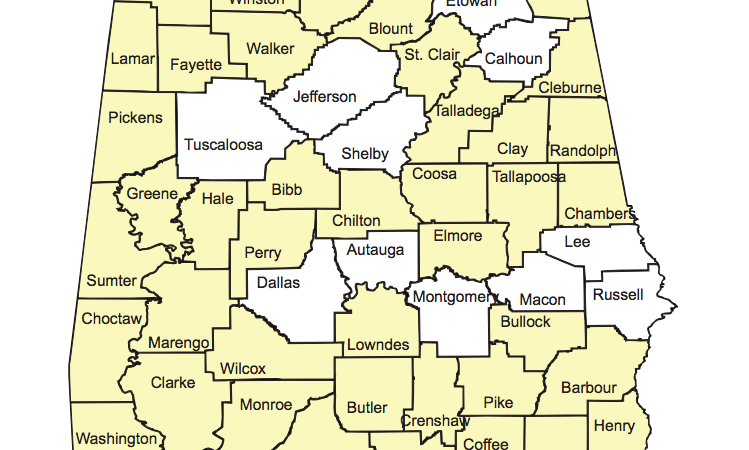
As a state, Alabama ranked thirteenth in 1996 on federal expenditures per capita and fifth in the category of direct payments for individuals. While the state average per capita federal expenditure in 1996 was $5,478, six Alabama counties received over $7,000 per person. These included Calhoun, Coffee, Dale, Macon, Madison, and Montgomery counties.

**06/97

The Many Faces of Tomorrow’s Employees

  • August 6th, 2019

The Many Faces of Tomorrow’s Employees


Three keys to economic growth are increases in capital investment, a growing labor force, and rising productivity. One of these, a growing labor force, is becoming a “tossed salad” ingredient in Alabama. Increasing numbers of women, immigrants, minorities, and returning retirees are becoming part of Alabama’s work force. How has this happened?

In the 1950s Alabama’s population was growing rapidly, and those “baby-boomers” are an important part of the work force today. However, from the early 1960s through the 1980s, the fertility rate declined. Children born in the 1970s and 1980s constitute the entry level labor pool for the 1990s and the early part of the next century. Because the supply is not as large of young, full-time, educated workers as in years past, businesses are becoming creative about filling their jobs.

Businesses realize that changing family structures and changing labor force participation rates affect their hiring practices. In the coming century we will see more women doing more different kinds of work and minorities will be less of a “minority” than ever before. Baby boomers will remain on the job in full force, and as they age the average age of the work force will increase. The U.S. Department of Labor reports that “close attention to the needs of working women, and especially of women with families, is no longer just a matter of legal requirements, or corporate ‘social conscience,’ or even simple fairness, but rather, competitive necessity in the scramble for high-quality, productive and dedicated workers.”

Alabama’s economy is still undergoing a structural shift away from manufacturing toward services. The Alabama Department of Industrial Relations forecasts that “Service” occupations will increase their share through 2005, while the number of jobs for “Operators, Fabricators, and Laborers” is expected to drop from 20.8 percent of jobs in 1990 to 18.9 percent in 2005. Part of this industrial shift has to do with global competition. Occupations that are easily replaced by automation are endangered as Alabama businesses are forced to become more competitive in a global economy. The other side of that coin is that businesses, in both the manufacturing and services industries, will need more and more skilled, well-educated employees.

Most of the fast-growing occupations will require some post-secondary education, whether technical, vocational, or advanced degree. In order to attract the quality of workers they need, employers will be willing to develop flexible schedules, to offer specialized training, and to hire nontraditional workers. They will spend more human resource time addressing diversity issues. In return for these changed business practices, they expect employees who are capable and intelligent. Businesses want to keep their turnover rates low and their productivity high.

A diverse work force is actually an advantage to the state because many kinds of workers bring many kinds of skills. Recruiting and managing this diverse work force will require innovative practices in the coming years, but the results will be worth the effort.

Annette Jones Watters

**06/97

How do People Spend Their Money?

  • August 6th, 2019

How do People Spend Their Money?


Spending patterns vary by age, region of the county, the size of the household, and income, among other things. Some things are purchased infrequently, others on a regular basis. The Bureau of Labor Statistics conducts the Consumer Expenditure Survey to quantify some of these observations. The seven major categories in the Survey are food, housing, apparel and services, transportation, health care, entertainment, and an “other” category that is mostly taken up by personal insurance and pensions, but also includes personal care products, reading, education, tobacco products, cash contributions, and miscellaneous items. Although the dollar amounts vary with every Survey report, some trends have been in place for many years.

Health Care. Health expenditures vary considerably by age. U.S. households, on average, spend five or six percent of their after-tax income on health care. The youngest householders, those under 25, spend less, both in total dollars and as a percent of all their expenses. As the age of the householder rises, so does the amount of the budget devoted to health insurance, drugs, medical supplies, and services such as doctor’s visits, lab tests, X-rays, or therapy. Householders age 65 or older devote, on average, 12 percent of their budget to health care.

Food. Everybody who has shopped in a grocery store has marveled at how much of what we buy there is not food. The Consumer Expenditure Survey counts the food items purchased in the Food category, and things like toilet tissue or scouring powder in the Housing category. American households spend about 14 percent of their budget on actual food items. However, these are not only grocery store food purchases. This category also includes food from vending machines, in restaurants, and special catered affairs. Two groups are spending a little more of their budget than average on food, but for different reasons. Households headed by someone under 25 spend more than average on food in restaurants; households headed by someone over 65 spend more on food eaten at home.

Housing. This category is more than shelter. It also includes utilities, household furnishings, household operations and domestic services, and other housekeeping expenses such as pest control, appliance repair, reupholstering or furniture repair, or rental or repair of lawn and garden tools. The average expenditure for this category seems to be about 32 percent of the American household budget. Householders aged 25-44 average a little more, possibly because this is the most common age to buy a house. Single-person households are also spending a bigger percent of their income on housing, possibly because larger households frequently have more than one earner, therefore the percentage of all their household money spent on housing is lower, even if the dollar amount is not.

House Furnishings and Equipment. We might expect young householders to spend a bigger percent of their budget on house furnishings because they are just setting up housekeeping. Or that middle-aged householders would spend relatively more because they are at the height of their earning power. Or that seniors might spend less because they have already furnished their homes. However, every age group seems to spend between five and six percent of the budget on furniture, floor coverings, and appliances. Furniture breaks; rugs wear out; and appliances quit working no matter how old you are.

Consumer Expenditure Survey 1995 Annual 1995 Percent Expenditures of Total Income before Taxes $ 36,948 Average Annual Expenditures $32,277 100% Food 4,505 14% Food at home 2,803 9% Food away from home 1,702 5% Housing 10,465 32% Apparel and services 1,704 5% Transportation 6,016 19% Health care 1,732 5% Entertainment 1,612 5% Other expenditures 3,274 10% Personal insurance and pensions 2,967 9% Pensions Note: Details do not sum to total due to rounding. Source: U.S. Department of Labor, Bureau of Labor Statistics

**07/97

Consumer Bankruptcy on the Rise: Some Possible Explanations

  • August 6th, 2019

Consumer Bankruptcy on the Rise: Some Possible Explanations


As bankruptcy filings across the country exceeded the million last year, Alabama’s consumer bankruptcy is also on the rise. Statistics from the American Bankruptcy Institute show that between 1994 and 1995 consumer bankruptcy filings in Alabama increased 19.0 percent. The filings from 1995 to 1996 increased 13.7 percent.

Many opinions have been voiced over this trend, but the finger cannot be pointed at any single factor. Some have suggested that the increase in consumer bankruptcy is because of an increased use of credit cards. Consumers are keeping higher balances with higher interest rates while accounts continue to open. In 1990 there were approximately 120 million credit card accounts. By 1994 this number had grown to 165 million. Families are finding that the convenience associated with the card is not free.

On the other hand, some groups believe that bankruptcy filings and credit card debt are only minimally connected. A report by SMR Research Corporation found that Hawaii has the highest ratio of debt to disposable income, yet they have one of the lowest bankruptcy rates of all 50 states. In fact, Hawaii had 4.6 annual filings per one thousand households (4th lowest) in 1995; Alabama was third highest with 15.5.

Medical insurance, or the lack of it, may be linked to bankruptcies. Within the states with the highest number of bankruptcy filings, some researchers have seen a high number of people not covered by medical insurance. In 1995 Tennessee had the highest number of consumer bankruptcy filings with 18 filings per one thousands households. The people without medical insurance totaled 14.8 percent of Tennessee’s population, with 814,000 people not insured. For Alabama, the number of people not covered by medical insurance in 1995 was 595,000, or 13.5 percent of the population. On the other hand, Hawaii had only 8.9 percent medically uninsured and was fourth lowest in filings. One problem with this correlation of medical insurance and bankruptcies is that it does not explain how states like South Carolina and West Virginia had low bankruptcy filings, yet 14.6 and 15.3 percent of their populations were not covered by medical insurance.

Another possible explanation for the increase in consumer bankruptcy is that filing under Chapter 7 may appear to be an “easy way out.” People can file under Chapter 7, have all their debts wiped clean, and still keep possession of their home and car. (Non-exempt property is given up.) Filing under Chapter 7 also allows those who live in apartment complexes to delay an eviction.

Although there is not sure explanation about why consumer bankruptcy is on the rise, it is easy to see that many factors that may contribute. There is an organizational push for tighter bankruptcy laws, and it may become harder for Americans to file for bankruptcy in the future.

Kelly Johnson
Graduate Research Assistant

**08/97

Co-op Programs in Higher Education

  • August 6th, 2019

A Partial Solution to Alabama’s Labor Shortage:
Co-op Programs in Higher Education


An old idea, integrating work experience into the formal education process, may be just what is needed to solve the labor shortages building in Alabama’s metropolitan areas. With unemployment rates between 3.3 and 4.7 percent in the state’s four largest metropolitan areas, labor shortages are the biggest single problem facing economic expansion. These shortages have occurred because the nation’s birth rate leveled off following the explosive “baby boom” period. Relying upon new workers coming to Alabama from other places is an unlikely short-run solution because other states have their own shortages of qualified workers.

Growing the State’s Labor Force without New Residents
The labor force is made of the people aged 16 and over who are employed or actively looking for work. This means retirees, students, and others not actively looking for work are not in the labor force. Retirees who take a part-time job to avoid boredom increase the size of the workforce. So do students who seek part-time jobs. Seniors and full-time students who work increase the size of the labor force without any change in the size of the population. While retirees often return to the labor force for non-financial reasons, students are increasingly motivated by rising college costs.

Higher Education Costs and Part-time Employment
Declining state support for higher education results in rising tuition. Nationally, college tuition rose 5.6 percent in 1996, compared to consumer price increases of 3.3 percent. Higher costs motivate students to supplement their incomes while attending college. Students generally prefer part-time to full-time employment in order to make steady progress toward graduation. A student who takes a job for pay, even 10 or 15 hours per week, constitutes an increase in the labor force.

Creating Partnerships: A Win-Win-Win
Many firms are becoming creative in human resource management to solve their labor shortages. Finding skilled full-time employees is a greater and greater challenge. Yet, at the same time, increasing numbers of college students need to work to offset rising tuition rates. A solution is to create jobs relevant to the students’ career objectives and at the same time relevant to a firm’s employment needs. If firms can offer such opportunities and students can obtain “credit” for the work experience, there will be a win-win-win situation. Yes, win-win-win. The student obviously wins by earning extra income, relevant on-the-job experience, and appropriate academic credit. The company benefits from adding a productive employee to the workforce and solving a labor shortage problem. And society benefits through a growing economy and lowered inflationary pressures created by scarce labor.

**09/97